


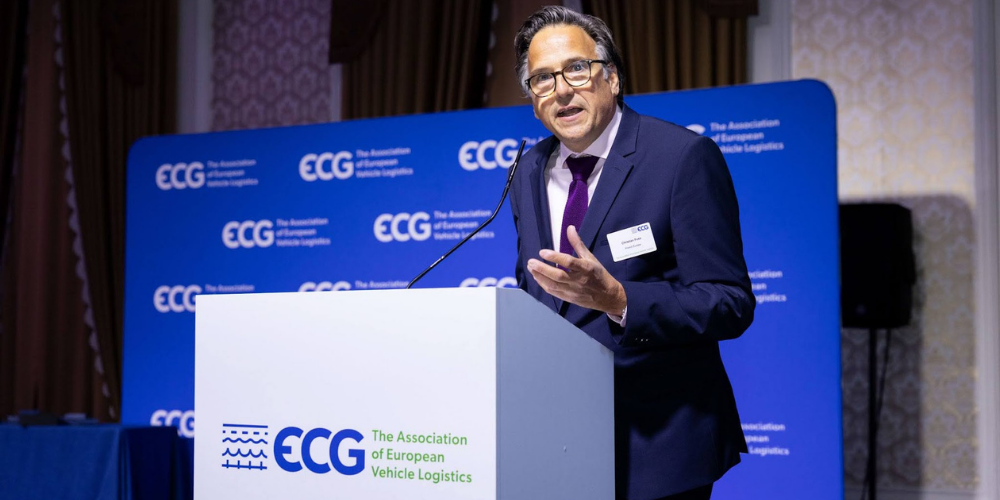
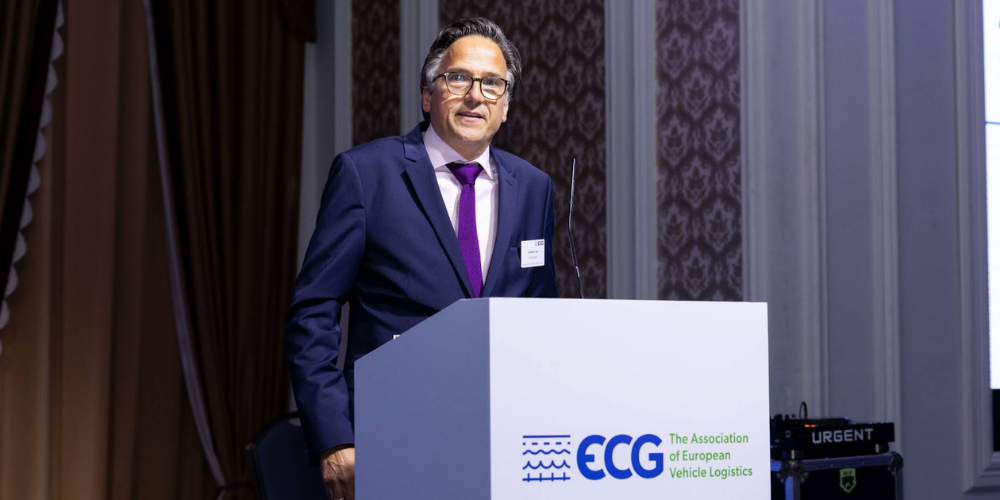

ProAct Global Solutions was proud to attend this year's ECG General Assembly and Spring Congress, held at the Çırağan Palace Kempinski in Istanbul, Türkiye, alongside leaders from across Europe's Finished Vehicle Logistics sector.
The General Assembly opened proceedings, with members hearing updates on the Association's activities, Elections, its Working Groups and the initiatives shaping the year ahead.
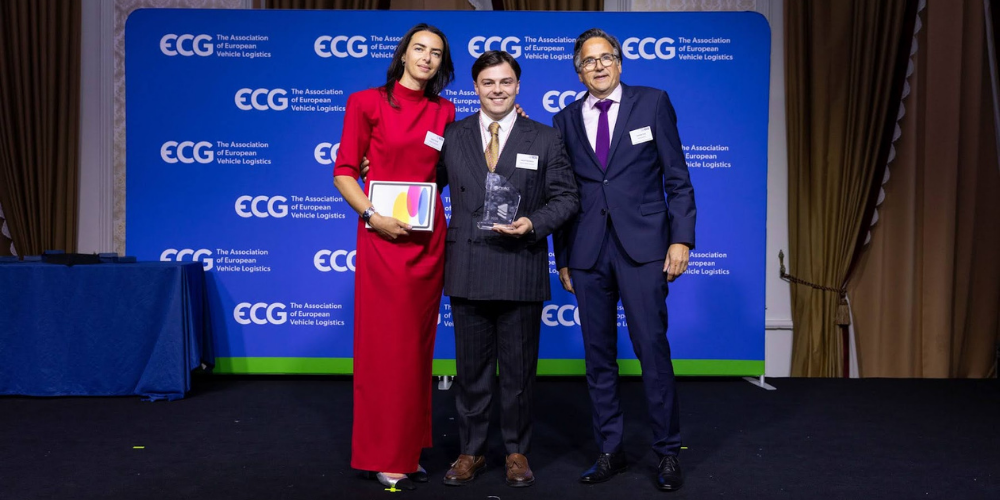
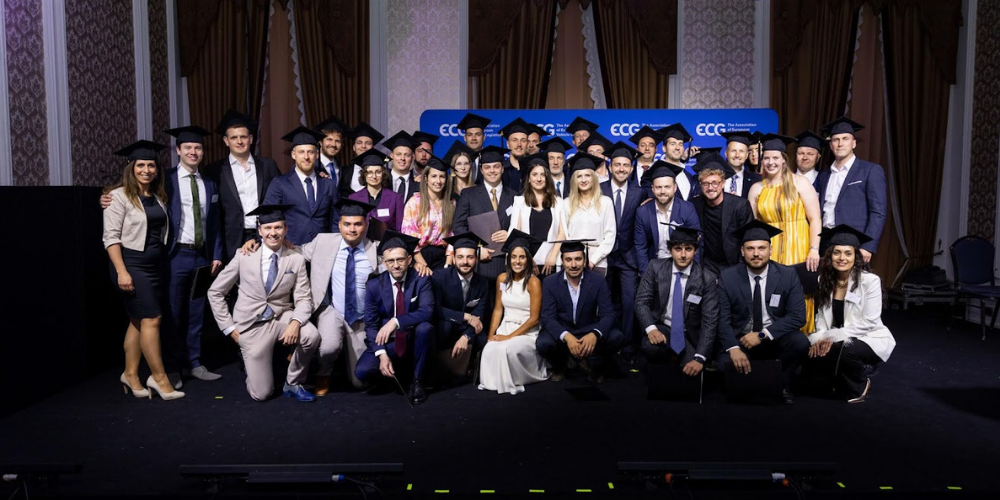
The standout moment came on the opening evening. After eight months of study, the ECG Academy's Class of 2026 graduated. Since 2019 ProAct is handing out the Digital Mindset Award for the student with the best thesis in the area of technology. This year there was a novum that there were 2 winners. Two stood out as exceptional, fully deserving of the recognition they received.
Each thesis is measured against three criteria, and together they capture the qualities Finished Vehicle Logistics will rely on in the years ahead.
- Vision: the ability to develop new perspectives that move beyond existing processes and build long-term competitive advantages.
- Future Orientation: an understanding of the key trends and challenges shaping the sector, from electric vehicles and automation to supply chain resilience and changing mobility, and their impact on Finished Vehicle Logistics.
- Digital Mindset: the ability to harness digital technologies, including real-time tracking, data analytics, AI-driven planning and connected platforms, to improve transparency, efficiency and customer value across the vehicle supply chain.
This year's two winners delivered against all three, from very different starting points.
Thesis: Digital Collaboration in Automotive Logistics: A Case Study on Multi-Stakeholder Integration Through a Centralized Project Management Tool
Josué's research examined how a centralised digital platform can strengthen coordination, transparency and information flow across complex automotive logistics operations.
He grounded the study in a real case: the repair of 316 hail-damaged vehicles at the Rackwitz compound. In a project of this kind, coordination is everything. OEMs, logistics providers, service companies and insurers must all act under time pressure, each relying on accurate, timely information.
Drawing on interviews that captured the strategic, operational and technical perspectives, he set out what a shared digital environment changes. In place of fragmented communication, every stakeholder works from a single source of truth, with real-time access to repair documentation, vehicle status, and photographic evidence. Transparency improves, and decisions are reached faster.
His conclusion was a measured one. Technology alone does not deliver the outcome. Success depends just as much on user adoption, organisational alignment and a genuine readiness to manage change.
Thesis: Quantum Computers in FVL
Vaida addressed a subject that could easily have become speculative, and kept it firmly grounded in real problems. Her thesis asks where quantum computing might genuinely fit within Finished Vehicle Logistics, without pretending that large-scale adoption is imminent.
She connected quantum and hybrid quantum-classical approaches to the problems that consistently cost the sector time: routing, dispatching, yard flow, capacity allocation, and disruption recovery. A practitioner survey and an environmental scan helped pinpoint where time is lost today, and where advanced optimisation might eventually matter.
Her pilot concepts, named Plan-Better-Faster, Smooth-the-Yard and Recover-Quick, translated a highly technical idea into experiments managers could realistically discuss. Her conclusion was carefully judged: quantum computing is best understood as a potential accelerator for a narrow set of constrained, combinatorial problems, working alongside existing planning systems rather than replacing them.
Two very different theses, pointing in the same direction. One sharpens collaboration on the ground today; the other looks to the optimisation of tomorrow. Both rest on the same principle: a connected industry where every stakeholder can see and trust the same.
It is encouraging to find this level of thinking among the next generation and future leaders in our industry. It was exciting to see the energy, enthusiasm and the sense of achievement from all the students graduating. It was a privilege to be there to see it, and we extend our warmest congratulations to Josué and Vaida. On this evidence, the future of Finished Vehicle Logistics is in very good hands.